Kamei Lab · NYU Abu Dhabi
Achievements
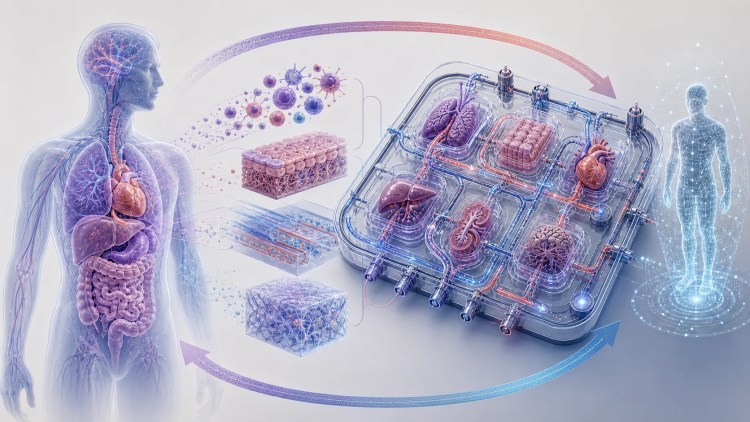
Reverse Bioengineering turns questions about living systems into experimental models, scientific knowledge, and new tools. Our achievements show what can grow from that approach—and what the next generation of researchers can help build.
Explore the outcomes
Discover the work behind the ideas.
Follow the evidence, explore inventions, or see how our community shares science.
Our approach in action
Understanding life by rebuilding it.
Understand
Ask how cells and tissues create a biological function, and identify the question that matters.
Rebuild and test
Combine cells, engineered environments, materials, and computation to model selected functions and test ideas.
Share and improve
Turn evidence into papers, methods, inventions, and clear explanations that others can use and build upon.
From questions to contributions
Two paths from our community.

Research perspective · 2026
Biology as an engineering blueprint.
Our Communications Biology Perspective proposes learning from liver development to guide the design of biological models. It sets out a roadmap for connecting cell biology, microengineering, and computational modelling—not a completed clinical platform.

Student-led scholarship · 2026
From class discussions to a journal paper.
A review in ACS Omega grew from our former Nanobiotechnology Class at NYU Abu Dhabi. Students developed their classroom learning into a critical review of quantum dots for targeted prostate-cancer imaging—a concrete example of education developing into scholarship.
Your next chapter
Build something that matters.
Whether you are beginning undergraduate research or preparing for graduate study, our work brings biology and engineering into the same conversation.
Depending on your project and stage of training, you can develop the skills to:
- Turn a big biological question into a focused, testable research plan.
- Build and analyse biological models, working across experiments, materials, and computation.
- Communicate evidence through scientific writing, presentations, and accessible explanations.
With sustained work, collaboration, and mentorship, projects can develop into publications, shared methods, and—where appropriate—inventions.
Outcomes depend on the project and the evidence. The shared ambition is to make a contribution you can explain, defend, and build upon.
Why it matters
Progress that reaches beyond the lab.
Our ambition is not simply to produce more outputs. It is to make biological knowledge useful to people, society, and the wider living world.
Better questions for medicine
Develop informative models that help researchers investigate disease and evaluate ideas for drug discovery and regenerative medicine.
More responsible research
Work toward reliable, human-relevant models that may complement—and, where validated, help reduce reliance on—animal experiments.
Knowledge for a wider world
Share science through teaching and public communication, and explore how cell-based approaches can support endangered-species research alongside conservation.
These are long-term research aims. Laboratory models represent selected biological functions; they are not ready-to-use treatments.